
白鹿原
孙炜东:更加联通和更具活力的中国—中亚,有利于促进亚洲共同发展繁荣_我的网站

一 |
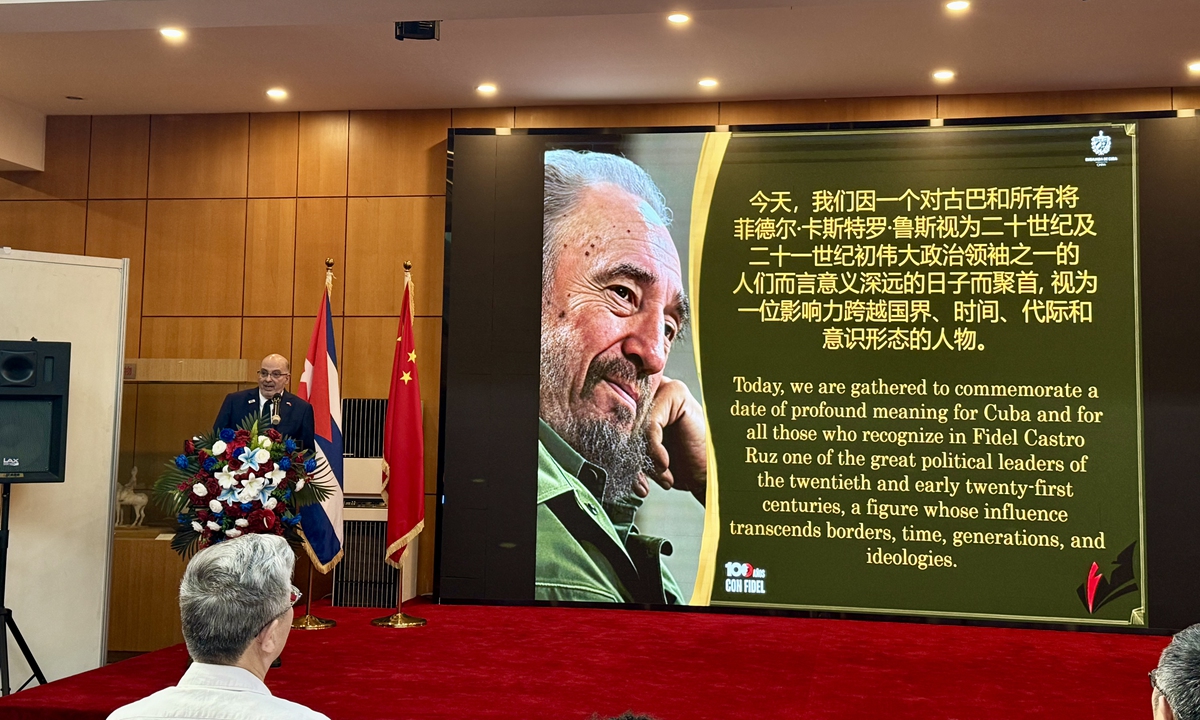
Delegates' speeches evaluated Fidel's role in promoting Cuba-China ties, especially when Cuba became the first Latin American and Caribbean country to establish diplomatic relations with China.
Alberto Blanco Silva, Cuban Ambassador to China, said in his opening remarks that the revolutionary leader is a figure whose influence transcends borders, time, generations, and ideologies.
Blanco noted that Fidel's life was devoted to Cuba's independence, social justice, solidarity among people, Latin American and Caribbean integration, and Global South, the socialist cause, and a more just and equitable international order.
Ambassador Blanco said that from Fidel, "we learned to practice solidarity through deeds, not merely beautiful words; to remain steadfast in the face of adversity and prudent in victory." For decades, Fidel's voice was echoed among developing countries, Blanco said, adding that Fidel promoted transformations that changed the course of Cuba's history.
Blanco also regarded Fidel as a statesman with a universal vision. Recalling the South Summit held in Havana, Cuba, in 2000, Ambassador Blanco quoted Fidel, saying "Globalization is an objective reality, which reveals our conditions as passengers abroad the same vessel - this planet inhabited by us all."
With this metaphor, Fidel illustrated the urgent need to unite global efforts as an international community to save the planet and humanity, preserve the future of our children, and reduce the gap between the North and the South, Blanco continued.
The Cuban Ambassador also noted Fidel's personal attention to China-Cuba relations.
Fidel, on behalf of the historic leadership, took the initiative, during a mass rally on September 2, 1960, to consult the people and announce the sovereign decision to establish diplomatic relations with the Government of the People's Republic of China, making Cuba the first country in the Western Hemisphere to dare take that step, the ambassador said, switching his speech from Spanish to Chinese.
Blanco added that it was Fidel who, with great frankness and courage, addressed the issue of the exclusion of the People's Republic of China and its admission to the United Nations in his speech before the United Nations on September 26, 1960.
Fidel also consistently upheld the one-China principle and, through his speeches and reflections, condemned interference in China's internal affairs and attempts to undermine the territorial integrity and sovereignty of the People's Republic of China. At the same time, Fidel helped foster mutual interest between Latin America and the Caribbean and China.
Moreover, Fidel instructed that the book, The Long March, an account of a great military feat by Red Army in 1930s whose 90th anniversary we are commemorating this year, be published. Fidel knew its history in great detail and regarded it as an inexhaustible source of inspiration, Blanco recalled.
From Blanco's view, Fidel has helped forge a bond that today stands as an example of cooperation between a large country and a small one, based on equality and mutual respect.
The diplomat said that today, the joint construction of a China-Cuba community with a shared future is an expression of the high-level of strategic trust achieved between "our countries and opens new opportunities to expand cooperation for the benefit of both our peoples."
"One hundred years after his birth, Fidel Castro remains present in the memory of all those who are grateful to him and all those who defend just causes, both within and beyond Cuba," Blanco concluded.
One of the reasons why Fidel is still relevant today is that while people commemorate him, they are also reaffirming the value of the bilateral friendship, which Fidel forged and helped strengthen.
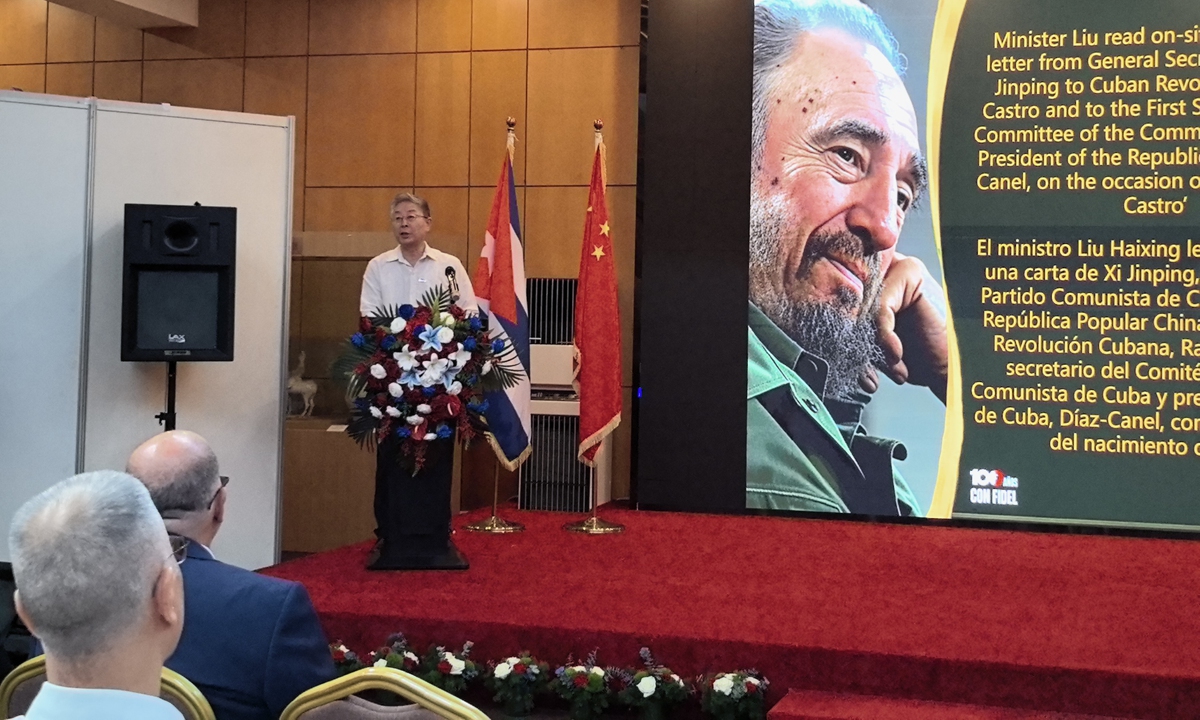
Ma served as Chinese Ambassador to Cuba from 2021 to 2024.
Ma said he visited on numerous occasions the Fidel Castro Center, which is located not far from the Chinese Embassy, as well as museums that feature Fidel.
"The more I learned about Comrade Fidel Castro, the more I was captivated by his noble character, outstanding qualities, and personal charisma," said Ma.
Fidel visited China twice and warmly received several Chinese leaders on their visits to Cuba, making historic contributions to the development of China-Cuba relations. The Chinese people will never forget him, Ma said.
In the current complex and evolving international landscape, China firmly supports Cuba in exploring a path of socialist development suited to its national conditions, firmly supports Cuba in safeguarding national sovereignty and security and opposing foreign interference, and stands ready to work together with Cuba and the wider international community to jointly uphold international fairness and justice, Ma stressed.
。

二 | 中新网北京8月26日电 (余湛奕 马帅莎 刘纪)“促进建设和平与繁荣的亚洲命运共同体”对话大会25日在北京举办。当天下午,在“以‘同球共济’精神打造伙伴关系”分论坛上,中国—中亚机制秘书长孙炜东表示,中国—中亚机制自建立之始,就秉持危难之际守望相助、变局之下团结协作、发展路上并肩前行的初愿初心。在元首外交的战略引领下,中国与中亚国家以平等相交、真诚相待的理念和全方位务实的双多边合作,为“同球共济”精神注入了丰富的时代内涵。 孙炜东从四个维度谈到中国—中亚命运共同体建设。

三 | 他表示,从区域安全维度看,中国与中亚同御风险、共守安宁。

四 | 中国与中亚国家积极深化区域安全合作,建立了公安内务部长会晤机制和应急管理合作机制,坚决打击“三股势力”,协作应对各种非传统安全挑战,同时加强高质量共建“一带一路”安保、救援和防灾减灾等领域务实合作。 从经济发展维度看,中国与中亚互通兴业、共同繁荣。孙炜东说,双方积极推进“一带一路”倡议与五国发展战略对接,合作领域从传统的贸易投资、基础设施建设、跨境物流等扩展至以绿色转型、数字经济等为代表的新质生产力合作。一个更加联通和更具活力的中国—中亚,有利于促进亚洲的共同发展和繁荣。 从民心民生维度看,中国与中亚心意相通、福泽共享。孙炜东表示,中国与中亚人文交流成果丰硕、成效显著,如互办文化年、开行跨境人文旅游班列、打造“未来之桥”青年研修营等。中国面向中亚国家建立了减贫、教育和荒漠化防治三大合作中心。当各国人民之间建立起牢固的情感纽带,文明互鉴便可持续、深入,命运与共的种子便会深深扎根于民间沃土。 从全球治理维度看,中国与中亚紧密协作、共担使命。孙炜东表示,中国提出的共建“一带一路”倡议和四大全球倡议,以及推动构建人类命运共同体理念得到五国的积极响应和支持。中亚国家在应对气候变化、荒漠化防治、国际冰川保护、山地可持续发展等议题上提出的有关多边倡议,也得到中方的有力支持。 孙炜东表示,希望并相信亚洲各国能够成为文明互鉴的桥梁和合作发展的先锋,携手探索实现高质量发展和共同现代化的新路径。在亚洲命运共同体理念的指引下,亚洲必将释放出更大的发展潜力、书写崭新的合作篇章。

五 | (完) 【编辑:蔡星雨】。

六 |
Current article:http://5mnj.shuicengchongmingnouhuawang.bond/lyisg8t/20260826/341293.html
Published on:10:06:04


